
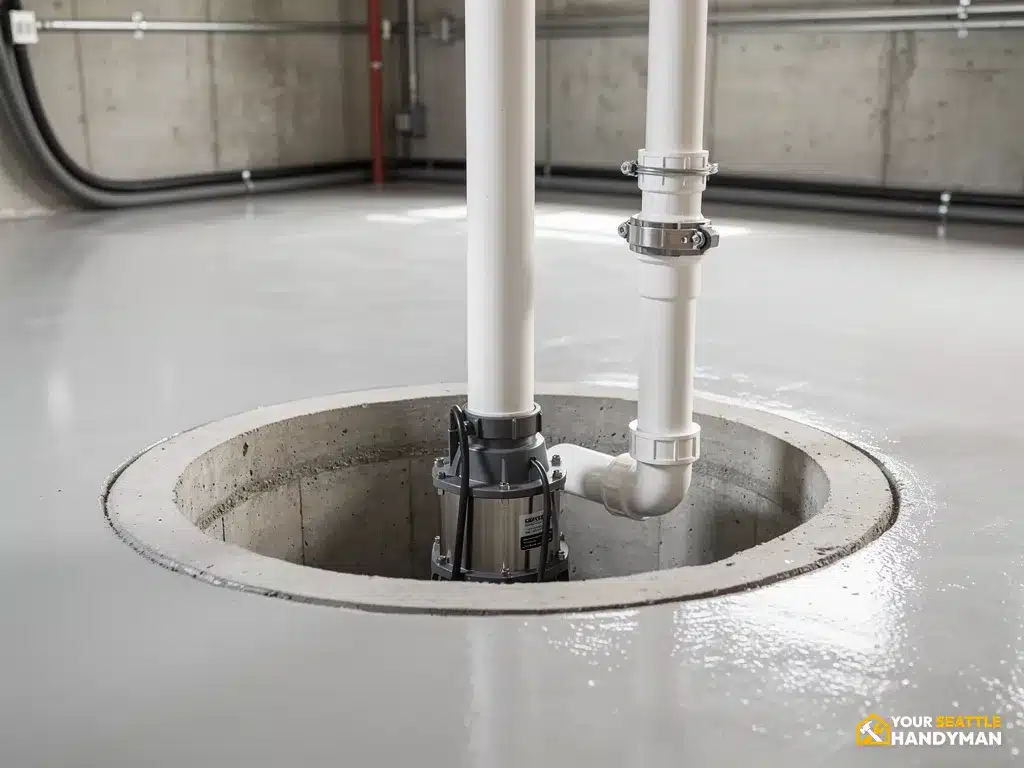
When a sump pump fails in a commercial building, nobody notices the pump. They notice water on a parking garage ramp, a work order from the elevator company about a wet pit, or a tenant in a below-grade suite calling about a damp carpet. In Seattle, those calls come in once the rainy season sets in and the ground stays saturated for weeks.
This guide is for commercial property managers, multifamily and apartment managers, building owners, and the facility maintenance companies that dispatch work for national brands. It covers where sump systems sit in commercial buildings, how they fail, when to repair or replace, and what routine upkeep looks like.
Where sump pumps work in commercial buildings
Most commercial and multifamily buildings in the Seattle area have more pump pits than anyone remembers. The usual places:
- Parking garages. Below-grade garages collect rain tracked in by cars, ramp runoff and groundwater through the slab. Their sumps often run a pair of pumps on an alternating controller with a high-water alarm.
- Elevator pits. Many elevator pits have a small sump to keep groundwater off the equipment at the bottom of the shaft. Elevator inspectors look at pit conditions, so a wet pit becomes a work order quickly. Pit work is coordinated with the building’s elevator contractor.
- Retail and restaurant basements. Storage rooms, walk-in coolers and mechanical rooms below street level depend on a pump that nobody checks until stock gets wet.
- Below-grade office suites and mechanical rooms. Tenant spaces, electrical rooms and boiler rooms sit right where groundwater wants to go.
- Multifamily buildings and crawlspaces. Apartment and condo buildings often have crawlspace or basement sumps under ground-floor units, plus pumps in storage and laundry areas.
How a failed pump turns into a bigger work order
Seattle’s long wet season and high groundwater keep pumps cycling for months at a time. When one stops, the pit fills and water spreads across the floor. In a garage, that means standing water at the low end of the ramp. In a basement it reaches stored inventory, equipment and electrical rooms. A flooded crawlspace under an apartment building can mean damp subfloors and mold complaints from ground-floor tenants.
The water doesn’t always come from the ground, either. A clogged roof drain or a leak at an HVAC curb can send water down an interior wall into the lowest level and load up a sump that was already working hard. Our guide to commercial roof leak repair covers where those leaks start.
Warning signs a sump pump is failing
A failing pump usually gives notice before it quits:
- Grinding, rattling or humming. Often a damaged impeller, debris in the intake or worn motor bearings. Left alone, the pump can seize.
- Constant cycling. A pump that won’t shut off usually points to a stuck float switch or a failed check valve letting water run back into the pit.
- No response to rising water. A jammed float, a tripped breaker or GFCI, or a burned-out motor. This one needs attention right away.
- High-water alarms. If the alarm goes off, the primary pump isn’t keeping up, even if the water drops again later.
- Rust, corrosion and sediment. Heavy corrosion on the pump or controls, or a pit half full of silt, means the pump is working harder than it should.
- Damp walls, odors or stains near the pit. Signs the pit has been overflowing between visits.
Repair or replace?
A repair makes sense when one part failed on an otherwise sound pump: a float switch, a check valve, a clogged intake, a loose discharge connection. Replacement is usually the better call when:
- the motor has burned out or the impeller is cracked or seized
- the pump is old and has already needed repeated repairs, so the next failure is a matter of time
- the pump can’t keep up during long storms, which means it may be undersized for the pit and the inflow
- the housing or controls are badly corroded
For garages and other pits with two pumps, replacing one pump often means checking the other and the controller too, since both have usually run the same hours.
We document the existing condition with photos before any work starts, so the property manager or the client of a maintenance company can see the pit, the pump and the controls and approve the scope.
Sump pump or ejector pump?
Not every below-grade pump moves groundwater. A sump pump handles clear groundwater and drainage. A sewage ejector pump lifts wastewater from restrooms, floor drains, laundry or kitchen fixtures that sit below the building’s sewer line. Ejector pumps use sealed, vented basins and pumps built to pass solids.
Older Seattle buildings often have both: a sump keeping groundwater out of a basement, and an ejector serving a basement restroom or a tenant suite below street level. When we assess a sump system we note any ejector basins nearby. Ejector work usually involves the building’s drain and vent piping, so it’s handled as permit-level plumbing, which is coordinated with a licensed contractor.
What we handle, and what we coordinate
Our commercial plumbing work on sump systems includes:
- inspecting the pit, pump, float switch, check valve, discharge line and alarm
- cleaning out sediment and debris from the pit
- replacing float switches and check valves
- like-for-like pump replacements
- testing high-water alarms and battery backup units
- photo reports for the property manager or the maintenance company’s client
Permit-level plumbing and electrical work, such as new discharge lines tied into the building drain, ejector systems, or new circuits for a pump or controller, is coordinated with a licensed contractor. If a job needs a specialist, we say so up front.
Keeping sump systems ready for the wet season
A few routine checks catch most problems before they reach a tenant:
- Inspect before the rainy season. Run each pump through a full cycle, test the float, check the check valve and look at the discharge line where it leaves the building.
- Clean the pit. Sediment and debris clog intakes and make motors work harder.
- Test alarms and backups. Confirm the high-water alarm sounds and the battery backup (if there is one) holds a charge. Storm power outages are common in the Puget Sound area.
- Keep the discharge clear. Make sure the outlet isn’t blocked, crushed or draining back toward the foundation.
- Keep a record. A dated photo log of every pit in the building or portfolio makes the next inspection, insurance claim or owner report easier.
When a pump fails after hours
Water is one of our 24/7 emergency categories. If a pump fails and water is rising in a garage, basement or elevator pit, call (206) 460-0033 any time. See our 24/7 emergency repairs for what else we cover after hours.
Why Seattle property teams use us
- WA Licensed Contractor YOURSSH744J3: licensed, bonded and insured, with 20+ years of experience
- Background-checked technicians and a 90-day workmanship warranty
- 24/7 for water emergencies
- Spanish-speaking owner and crew, which helps with tenant coordination
- Seattle and King County first, plus Snohomish and Pierce counties
Commercial sump pump FAQ
Do you repair sump pumps in parking garages and elevator pits?
Yes. We inspect, clean and repair sump systems in parking garages, elevator pits, basements, mechanical rooms and crawlspaces in commercial and multifamily buildings. Elevator pit work is coordinated with the building’s elevator contractor.
Do you take sump pump work orders from facility maintenance companies?
Yes. We take work orders from national and regional maintenance companies, follow their check-in, photo and sign-off requirements, and send one invoice per work order with the WO or PO number on it.
Can you handle sump pump emergencies after hours?
Yes. Water and leaks are part of our 24/7 emergency service. Call (206) 460-0033 if a pump has failed and water is rising.
Are you licensed for sump pump and plumbing work?
We’re a Washington licensed contractor (YOURSSH744J3), bonded and insured. We handle routine sump system repairs and like-for-like replacements. Permit-level plumbing and electrical work, including ejector systems and new drain connections, is coordinated with a licensed contractor.
Should a commercial sump pump be repaired or replaced?
Repair when one part has failed on a sound pump, such as a float switch or check valve. Replace when the motor has burned out, the impeller is damaged, the pump has needed repeated repairs, or it can’t keep up during long storms.
What areas do you cover?
Seattle and all of King County first, plus Snohomish and Pierce counties.
Need a sump pump looked at in a Seattle-area building? Send the work order to info@yourseattlehandyman.com, call (206) 460-0033, or contact us to add us as a vendor.