
The first sign of a commercial roof leak is rarely on the roof. It’s a brown ceiling tile over aisle 8, a drip in the stockroom, or a work order that just says “ceiling leaking, possible drain clogged.” In Seattle, those calls pick up as soon as the rainy season starts. A small problem that sat quiet all summer finally gets enough water to show up inside.
This guide covers where commercial roof leaks actually start on the low-slope roofs common to retail, office and mixed-use buildings around Seattle and King County. It explains what a repair involves, and when a localized fix is the right call versus bringing in a roofing contractor. The examples come from our own work orders (client names withheld).
Where commercial roofs leak
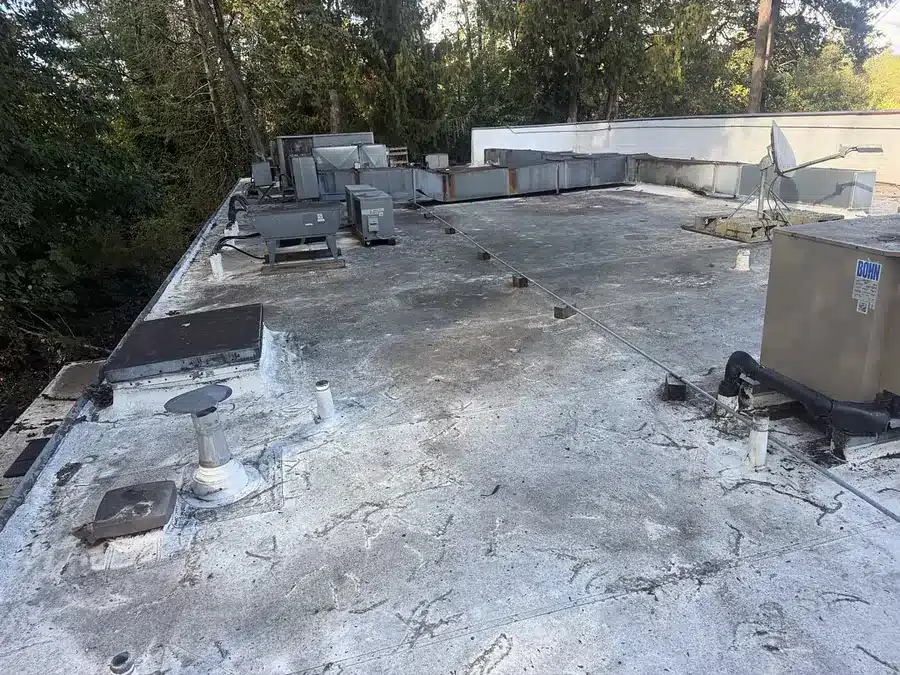
Flat and low-slope roofs don’t usually fail in the middle of the field. They fail where something interrupts the membrane: a rooftop unit, a drain, a wall, a vent. Those transitions are where we find the source almost every time.
HVAC curbs and rooftop penetrations
Every rooftop HVAC unit sits on a curb, and the membrane has to turn up that curb and be sealed. Sun, foot traffic from service techs, and seasons of expansion and contraction loosen those seams.
Example: a pharmacy in Redmond. The membrane around a rooftop HVAC curb was torn and the flashing had failed. We cut back the loose and torn membrane to sound roofing and prepared the full perimeter of the curb. We made localized repairs to the damaged substrate exposed during demo, then installed new membrane flashing that runs onto the roof field and up the curb as one continuous waterproof transition. Corners were reinforced, and every seam and termination was sealed and inspected.
If the leak inside sits roughly below a rooftop unit, start your search at the curb.
Roof drains, scuppers and gutters
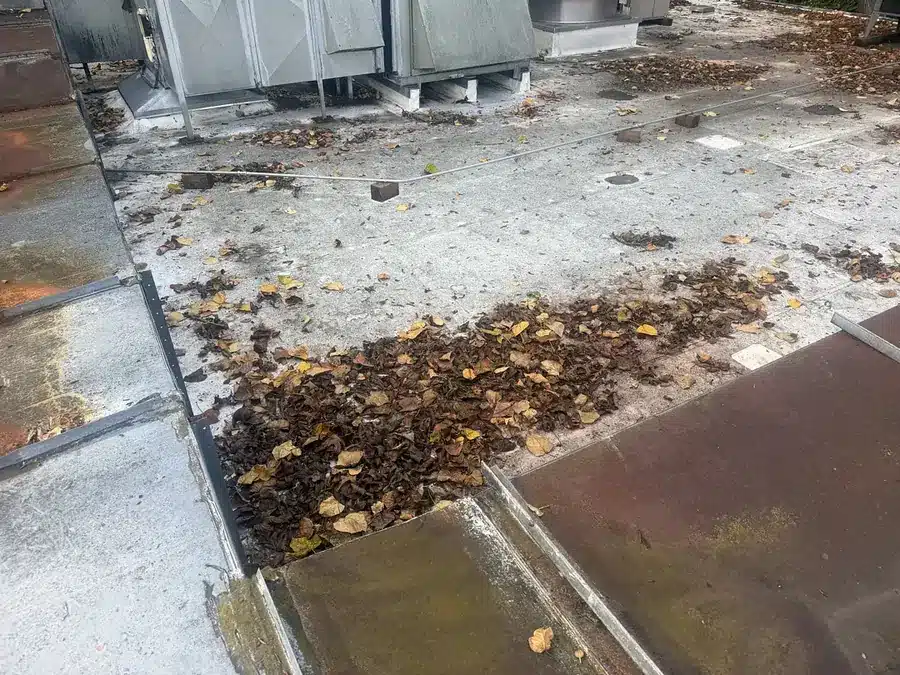
A clogged roof drain doesn’t just overflow. Water ponds and sits against seams and flashing that were never meant to be underwater. In our area, fir needles, leaves and moss are the usual culprits, and they build up fast on roofs near trees.
Example: a commercial building in Lynnwood. We cleared debris from about 9,500 sq ft of roof across two levels, then cleaned the gutters, drains and two downspouts in a single day before the rains.
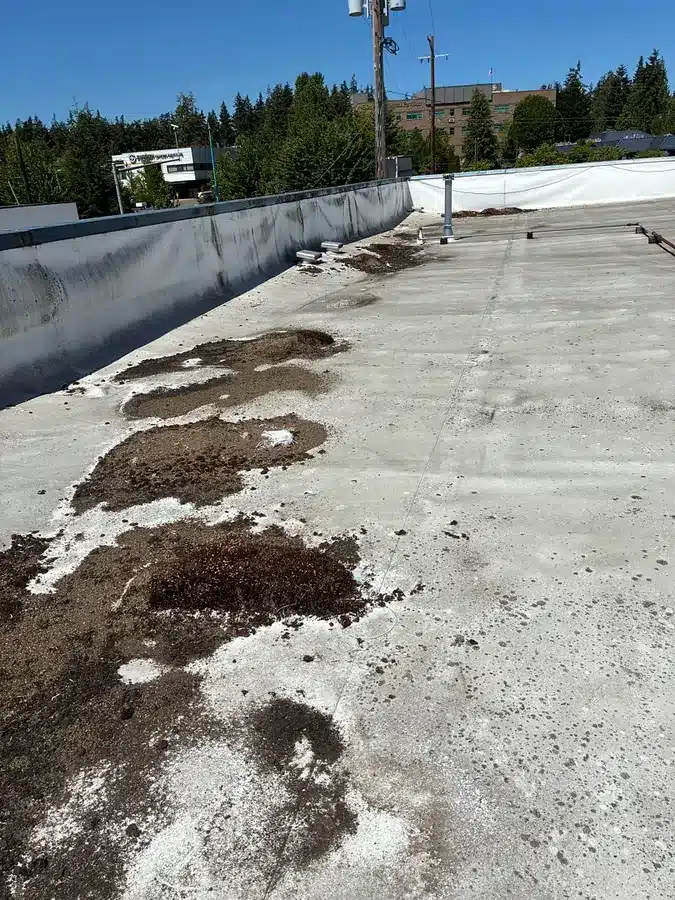
Example: a retail center in West Seattle. As part of a new owner’s baseline inspection, we cleaned the roof drainage above a tenant space and documented it with before and after photos.
When a work order says “possible drain clogged,” it usually is. But we still check the flashing around the drain body. A drain that’s been ponding for months has often stressed the seal around it too.
Walls, parapets and overhangs
Where a roof meets a wall, the flashing has to lap up the wall and be sealed or counter-flashed. Old patches in these spots tend to crack and let water behind them.
Example: a retail store in Marysville. Water was getting in around wall intrusions on an overhang roof. We removed the old patch, applied new wet patch over about 8 sq ft surrounding the intrusions, and replaced four water-damaged ceiling tiles in the storage area below, the same day the call came in.
Example: a home in West Seattle. The same principle applies on pitched roofs. The source of the leak was the chimney flashing. We replaced eight damaged plywood sheets, about 350 sq ft of weather barrier and the shingles, and installed new flashing around the chimney.
What to do when a leak shows up inside
If you’re the property manager or facility coordinator who gets the call, these steps protect the building and speed up the repair:
- Protect people and stock. Put out buckets, move merchandise and equipment, and post a wet-floor sign.
- Keep water away from electrical. If water is near light fixtures, panels or outlets, keep people away and shut off that circuit if you can do so safely.
- Take photos of the ceiling, the floor and anything damaged, with a wide shot that shows where in the building it is.
- Note what’s above it. Is the drip under a rooftop unit, near an exterior wall, or near a roof drain? That one detail can save a lot of diagnosis time.
- Call it in as an emergency if it’s active. Water and leaks, and roof penetrations, are on our 24/7 emergency repair list. We’ll stop the water first and come back for the permanent repair if needed.
Repair or replace: honest scoping
Most commercial roof leaks are localized: a curb, a drain, a seam, a wall transition. A targeted repair done right, with proper membrane, flashing and sealant, can solve the problem without touching the rest of the roof. That’s the work we handle as part of our roofing and weatherproofing services.
Sometimes the right answer is a bigger one. If the membrane is failing across the field, the insulation below is saturated, or the roof has been patched so many times that new patches don’t hold, a full replacement by a roofing contractor is the better spend. We’ll tell you that rather than keep patching.
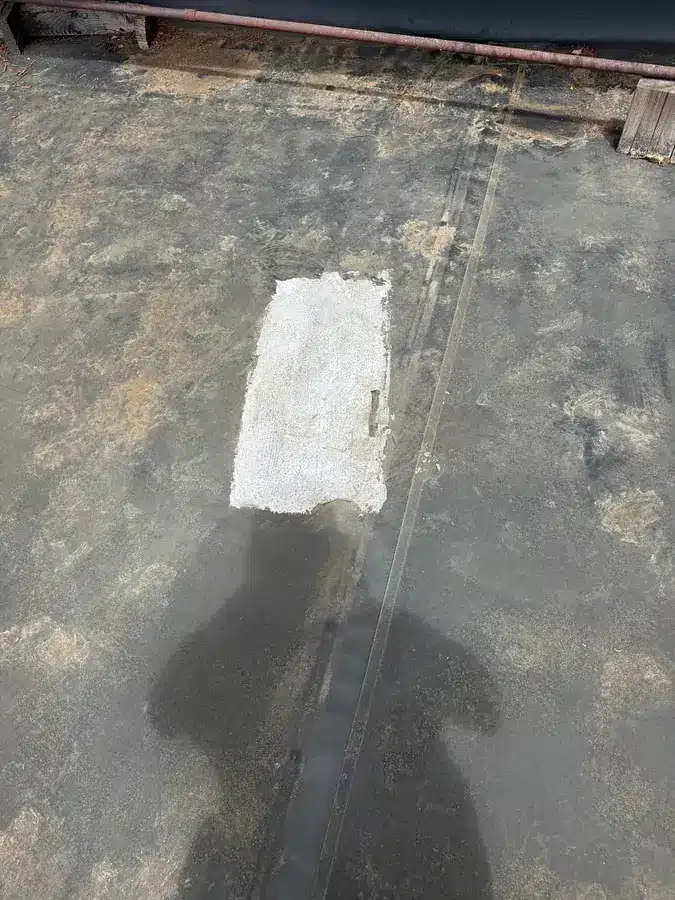
Example: a commercial building in Renton. A parapet coping and single-ply membrane issue came in. We inspected the roof and produced an inspection report so the owner could decide how to proceed. In that case the repair wasn’t approved, but the owner had the documentation to plan the next step.
Don’t forget the ceiling
Fixing the roof is half the job. Wet ceiling tiles sag, stain and grow mold, and leaving them up makes it impossible to tell whether the repair worked.
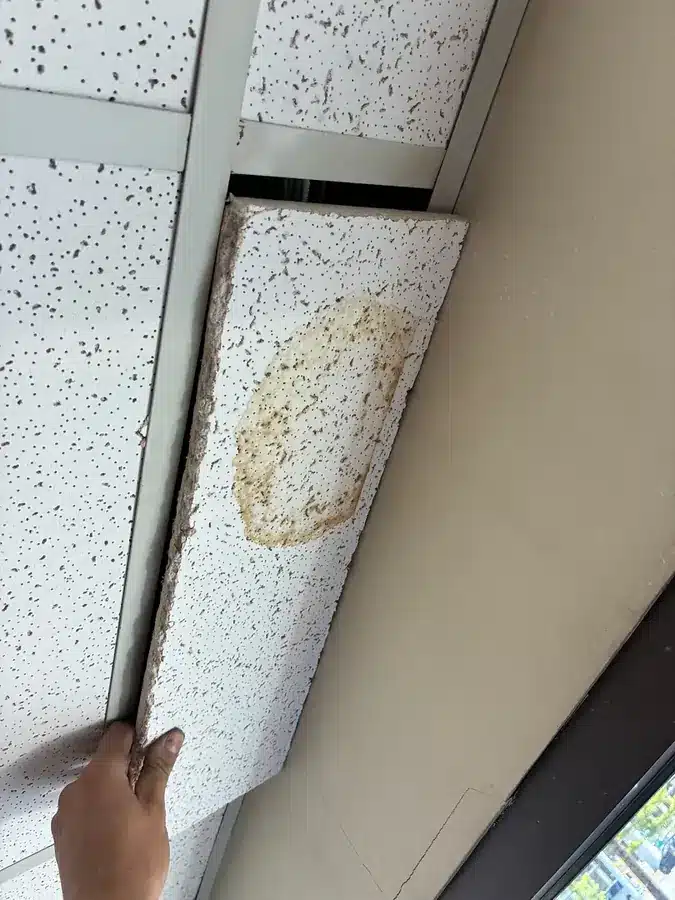
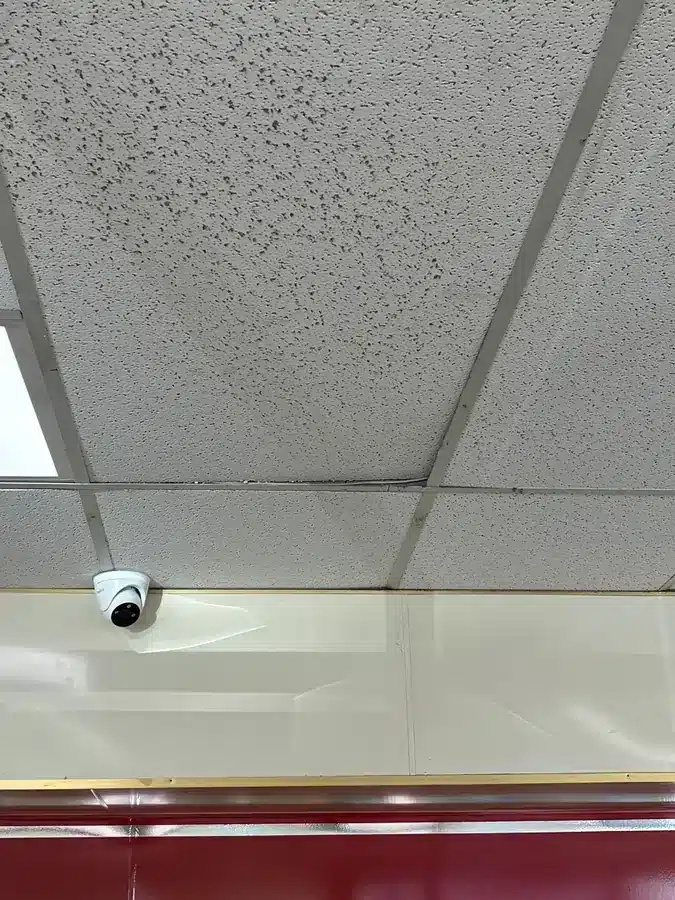
- A store in Stanwood needed 25 water-damaged ceiling tiles replaced on the office side after the underlying leak had been patched.
- A store in SeaTac used a specialty fire-rated PVC tile, so we sourced the matching tile instead of mixing in a standard one.
Replacing the damaged tiles right after the roof repair also gives you a clean baseline. If a new stain appears, you know immediately.
Before the next storm: a short checklist
For property managers running several buildings, a fall roof walk catches most leaks before they reach the tenant:
- Clear roof drains, scuppers, gutters and downspouts (again after big windstorms)
- Inspect the membrane and flashing around every HVAC curb, vent and pipe penetration
- Look for ponding and stains that show where water sits after rain
- Check wall and parapet flashing and old patches for cracks or lifting edges
- Photograph everything, so next year’s inspection has a comparison
If you manage a portfolio across King, Snohomish and Pierce counties, we can walk the roofs on one visit per site and send a photo report with prioritized fixes. See how we work with commercial property managers.
Commercial roof leak FAQ
Can a handyman fix a commercial roof leak?
A commercial maintenance team can handle localized repairs: membrane and flashing repairs at curbs and penetrations, drain and gutter clearing, wall-flashing and wet-patch repairs, and the interior ceiling damage. Full roof replacements belong with a roofing contractor, and we’ll say so when that’s what the roof needs.
Is a roof leak an emergency?
An active leak is. Water and leaks, and roof penetrations, are part of our 24/7 emergency service. The first goal is to stop water from entering and protect the space. A permanent repair can follow once the roof is safe to work on.
How do I know the leak is coming from the roof?
The location is the best clue. Drips below a rooftop unit, a roof drain or an exterior wall usually point to the roof or its flashing. Water that shows up only when equipment is running may be something else. We check both before quoting a repair.
Leak in one of your buildings? Your Seattle Handyman is a licensed, bonded and insured commercial maintenance team (WA Lic. YOURSSH744J3) with background-checked technicians, a 90-day workmanship warranty, and 24/7 emergency response across Seattle, King, Snohomish and Pierce counties. Call (206) 460-0033 or request service.