
Commercial doors take more abuse than anything else in a building. A convenience store door can cycle hundreds of times a day, a back door gets propped open with whatever is nearby, and a restroom door gets kicked, slammed and leaned on. When one fails, it isn’t cosmetic. A door that won’t close or latch is a security problem, a safety problem and, in a Seattle winter, a heating bill.
This guide covers the commercial door repairs we see most often across Seattle and King County: closers, hinges and pivots, latches, seals, storefront glass and rolling doors, plus how to tell when a door should be replaced rather than repaired. The examples come from our own work orders (client names withheld).
Start with the symptom
Most door problems trace back to one of a few parts. The symptom usually tells you which one:
- The door slams, swings shut too slowly, or won’t close on its own: the closer
- The door sags, drags on the floor or rubs the frame: hinges or pivots, or a loose or split frame
- The door closes but won’t latch: the strike plate, the latch, or the door’s alignment
- Drafts, water or daylight under the door: the bottom seal, sweep or threshold
- Broken glass: board-up first, then the right replacement glass
- Rust, a split frame or a door that keeps failing: time to weigh repair against replacement
Door closers
The closer controls how a door swings and latches. Most have adjustment valves for closing speed and the final “latch” stroke. A door that slams or doesn’t quite latch can often be fixed with an adjustment. A closer that leaks oil, or won’t hold an adjustment, needs replacing.
Example: a convenience store in Marysville. The passive leaf of a double door had a failed closer. We replaced it with a heavy-duty commercial closer and set the swing and latch speed.
Hinges, pivots and latches
When a door drags or won’t latch, the problem is often where the door hangs, not the door itself.
Example: an apparel store in Tacoma. Four fitting-room doors stopped closing on their own, a safety concern during store hours. We replaced four pairs of hinges and the doors closed properly again.
Example: a pharmacy warehouse in Seattle. A swinging warehouse door had a worn pivot. We installed a new pivot bearing kit and put the door back in service.
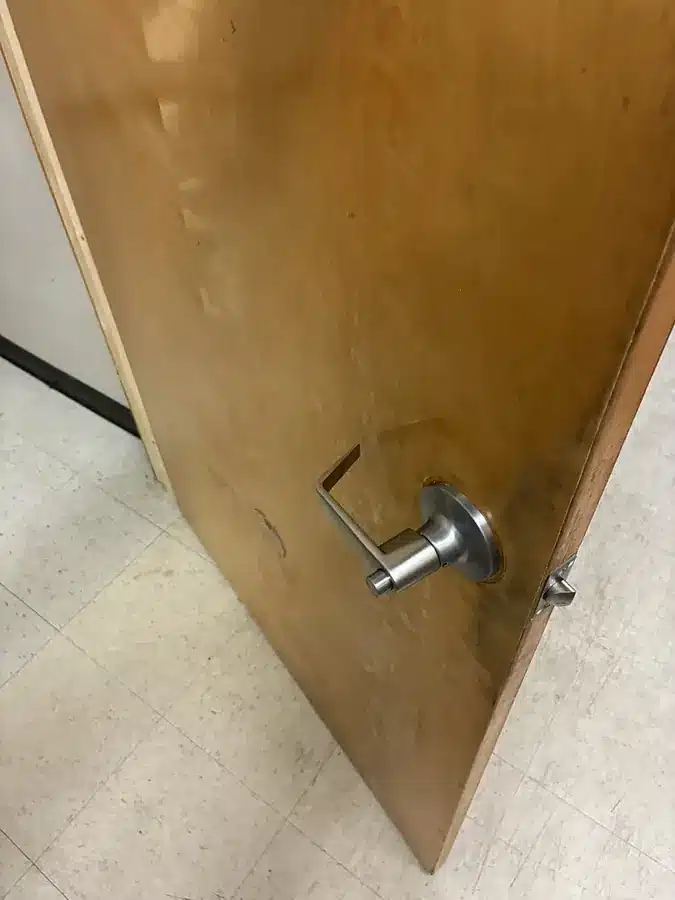
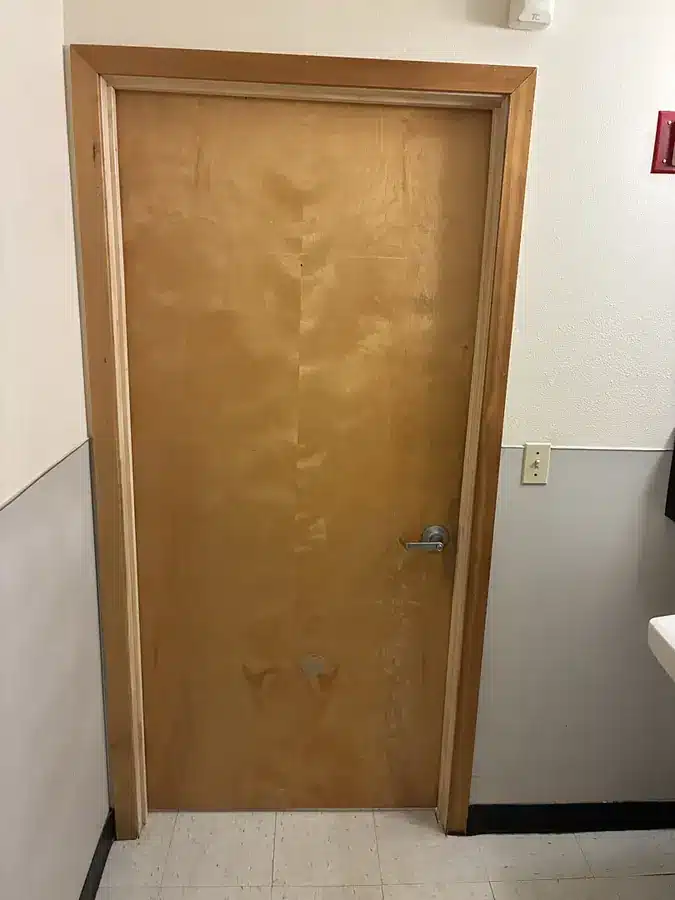
Example: a restroom in Bellevue. The door closed but wouldn’t latch. Filing the strike plate so the latch could catch fixed it in one visit, no new hardware needed.
Sometimes the frame is the problem. A split frame can’t hold hinge screws, and new screws and anchors are only a temporary fix.
Gaps, seals and weatherstripping
Seattle’s rainy season finds every gap. A worn sweep or missing seal lets in water, cold air and pests, and on a busy entrance it wears out fast.
Example: a convenience store on Aurora Avenue, Seattle. A visible gap under the door was fixed with a new 36-inch under-door seal.
Example: a commercial building in Woodinville. A metal door and frame were rusting. We removed the rust and the old weatherstripping, filled the voids with epoxy, sanded and painted, then installed new weatherstripping and kick plates on both sides. It was a repair instead of a replacement.
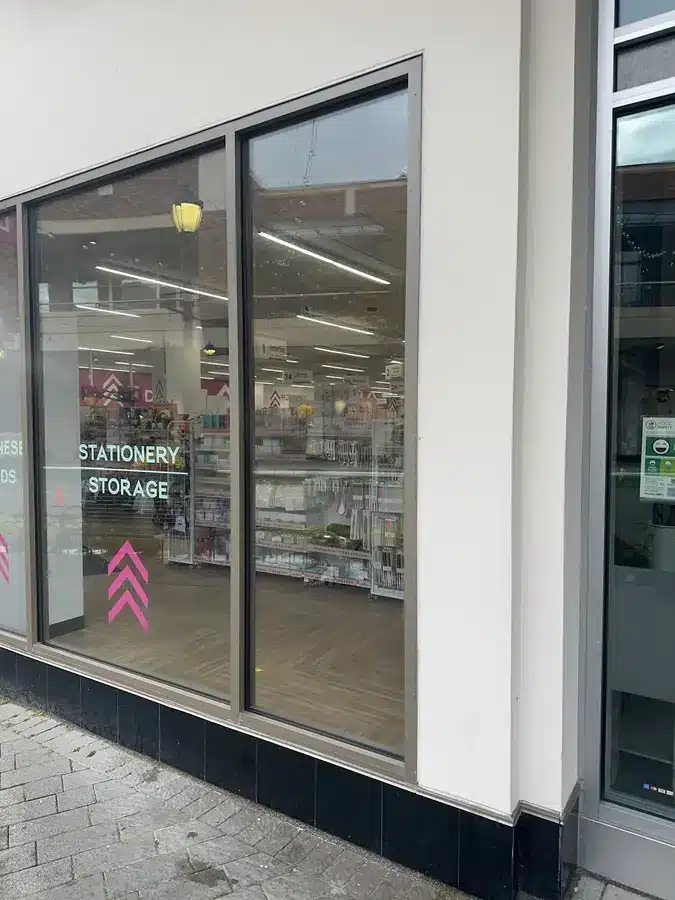
Storefront door and window glass
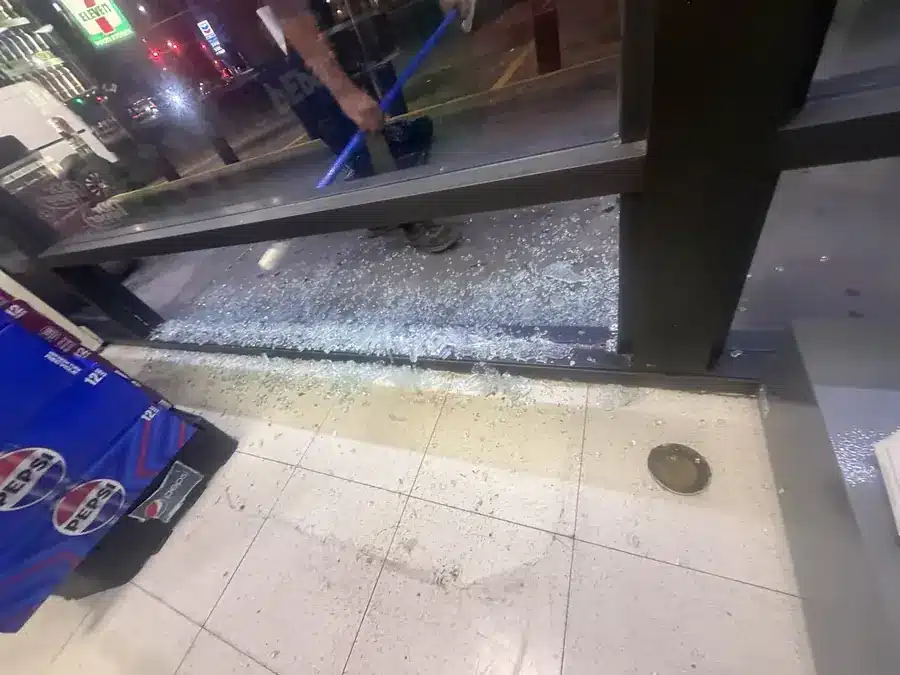
Broken storefront glass is a two-step job: secure the opening now, then replace the glass with the right product.
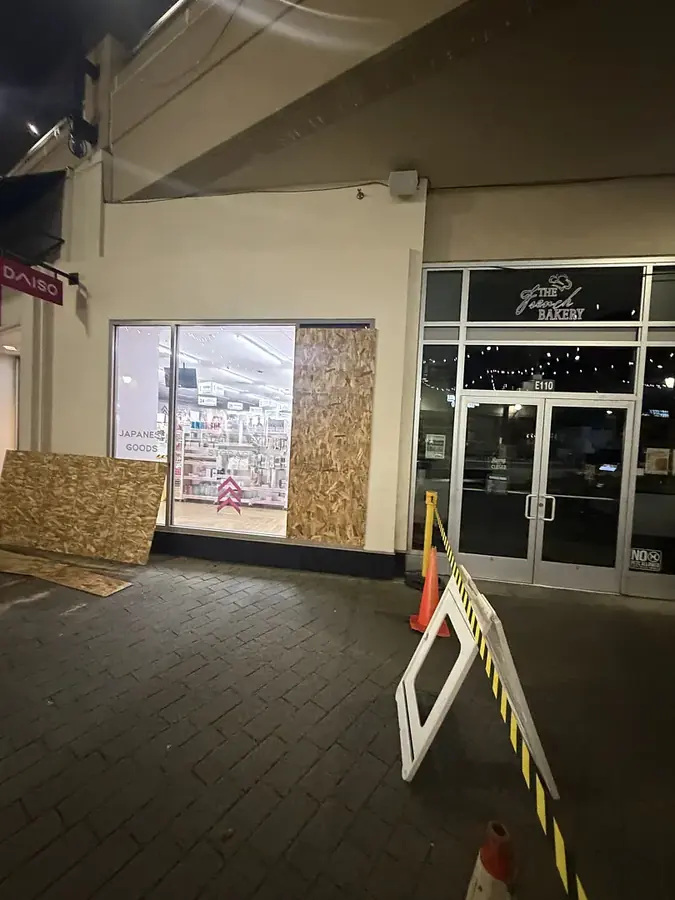
- Board up. A broken window or door is a security and safety emergency, and it’s on our 24/7 emergency repair list. We board the opening so the store can close safely.
- Measure and order the right glass. Doors and storefronts typically need safety glass: tempered or laminated, cut to exact size.
- Install and remove the board-up.
Example: a convenience store in West Seattle. The lower glass in a door broke over a weekend. The opening was boarded, then we installed a new 1/4-inch tempered panel and removed the boarding.
Example: a convenience store in Auburn. We boarded a broken front window, then came back and installed a new 1/4-inch laminated glass panel in its frame.
Example: a retail store in Redmond. We boarded a broken storefront panel overnight as an emergency call, then coordinated a new 35 × 96-inch tempered glass panel.
Rolling and service doors
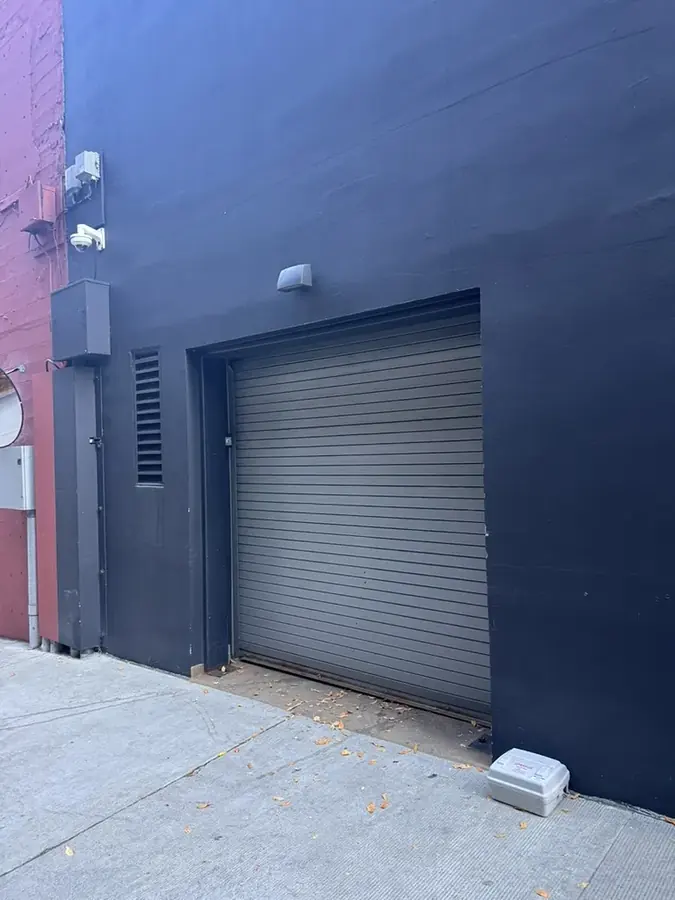
Back-of-house doors (trash rooms, receiving and stockrooms) get less attention until they stop working. A rolling door stuck open is a security gap, and one stuck closed blocks deliveries and trash pickup.
Example: a pharmacy in South Lake Union, Seattle. The trash-room rolling door was out of service. We responded the same day and got it working again.
Repair or replace?
Most commercial door problems are repairs. Replacement makes sense when:
- the frame is rusted through, split or out of square
- the door no longer fits its opening, even after the hinges are adjusted
- the door has been patched repeatedly and keeps failing
- security or code needs have changed, for example a back door that needs a stronger door and an exit device
Example: a dollar store in Monroe. The back security door and frame were beyond repair. We removed them and set a new welded steel frame anchored into the structure. Then we hung a fire-rated 18-gauge steel door kit with heavy-duty hinges, a Grade 1 exit device and a closer, and adjusted it for proper swing and latch.
Our doors, windows and storefront services cover both repairs and full replacements, from single steel doors to storefront entrances.
Keeping doors working: a quick checklist
For property managers and facility teams, a few minutes per door each month prevents most service calls:
- Open each door fully and let it close on its own. It should close smoothly and latch every time.
- Check for oil on the closer body or the floor below it.
- Look for loose hinge or pivot screws, and for gaps along the frame.
- Check sweeps, seals and thresholds before the rainy season.
- Report sticking locks and handles early, before they fail with the store open.
- Photograph problem doors, so the technician arrives with the right parts.
If you manage several properties, we can walk every door on a site in one visit and fix what we can on the spot. See how we work with commercial property managers, or our work for retail and convenience stores.
Commercial door repair FAQ
Is a broken commercial door an emergency?
Yes, if it can’t close, lock or protect the space. Broken windows and doors are part of our 24/7 emergency service. We secure the opening first, then come back for the permanent repair.
Can you fix a door closer instead of replacing it?
Often. Many closers just need their swing and latch speed adjusted. If the closer leaks oil or won’t hold an adjustment, it needs replacing.
Do you replace storefront glass?
Yes. We board up broken storefront glass around the clock, then measure for and replace the panel with the right safety glass, tempered or laminated, for that door or window.
Can you replace a whole commercial door and frame?
Yes. We replace steel doors and frames, including the exit devices, closers and locksets, as well as storefront door systems.
Door giving you trouble? Your Seattle Handyman is licensed, bonded and insured (WA Lic. YOURSSH744J3), with background-checked technicians, a 90-day workmanship warranty and 24/7 emergency response across Seattle, King, Snohomish and Pierce counties. Call (206) 460-0033 or request service.