
If you dispatch work for a national facility maintenance company, a Seattle-area work order looks the same as one in Phoenix or Charlotte: a store, a problem, an NTE, and instructions that have to be followed exactly or the invoice gets held. What changes is the vendor on the other end. The difference between a good local sub and a bad one shows up in recalls, missing photos, and invoices you have to send back.
We’re a commercial handyman team in Seattle, and subcontracting for national maintenance and retail-services companies is a core part of our work. Here’s what we think you should expect from any Seattle subcontractor, and how we run our work orders. Examples come from real jobs; client names are withheld.
The work order instructions are the job
National work orders come with instructions, and they’re not suggestions. The ones we see most often:
- Call to check in and check out with the dispatch desk, not just the store
- Photos required: before, during and after
- Don’t discuss cost or pricing with store staff
- Store stamp and manager signature on the sign-off sheet as proof of work
- One invoice per work order, with the WO or PO number on it
- A labor, materials and tax breakdown on every invoice
- Paperwork submitted within a set window after completion, often 24–48 hours
A subcontractor who treats those as paperwork to do later is creating work for your team. We build our process around them. Every job is logged with the WO/PO number in its title from the moment it comes in, so the number follows the job through the estimate, the report and the invoice.
The NTE is respected, and increases are justified
A not-to-exceed amount means exactly that. When the work fits the NTE, we do it. When it doesn’t, you get an itemized NTE increase request before any extra work happens, not a surprise invoice.
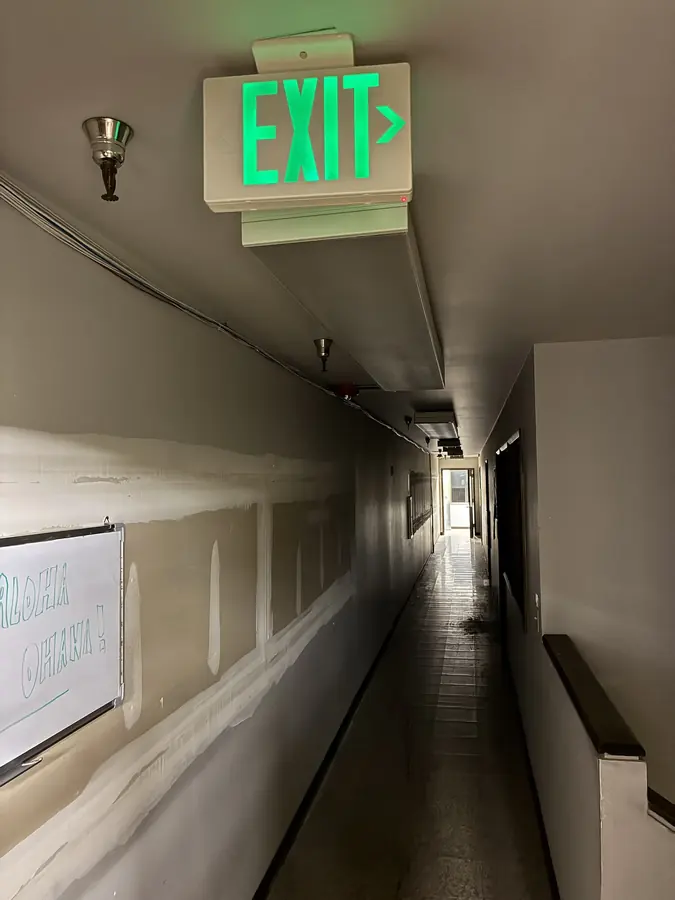
Example: an annual emergency-light inspection program for a national apparel retailer. Each store’s work order covered an inspection at an agreed flat trip fee plus one hour. At one mall store in Tacoma, the inspection found 28 of 31 emergency lights and 11 of 16 exit signs failing. Instead of starting repairs, we sent an NTE increase request listing:
- the counts from the inspection
- the exact replacement batteries, matched to the fixture models we recorded on site
- the labor per fixture
The client could approve it knowing exactly what they were paying for.
Documentation you can forward to your client
Your client wants proof, and so do you. For every work order we provide:
- A work report with existing-condition notes and before and after photos
- Specifics, not summaries: counts, model numbers and part numbers (on that inspection program, the emergency-light and exit-sign models and their battery part numbers)
- The signed and stamped sign-off sheet when the work order requires one
- A status update across all sites for multi-store programs, so you’re not chasing us store by store
If a job isn’t approved after inspection, you still get the report. Example: a commercial building in Renton. We inspected a parapet coping and single-ply membrane issue and delivered an inspection report. The repair wasn’t approved, but the client had what they needed to decide.
One tech who can clear most of the ticket
Every extra trade on a work order is another vendor to find, schedule and invoice. A good commercial handyman sub should be able to clear most store-level tickets in one visit. A sample of work orders we’ve completed in the last six months:
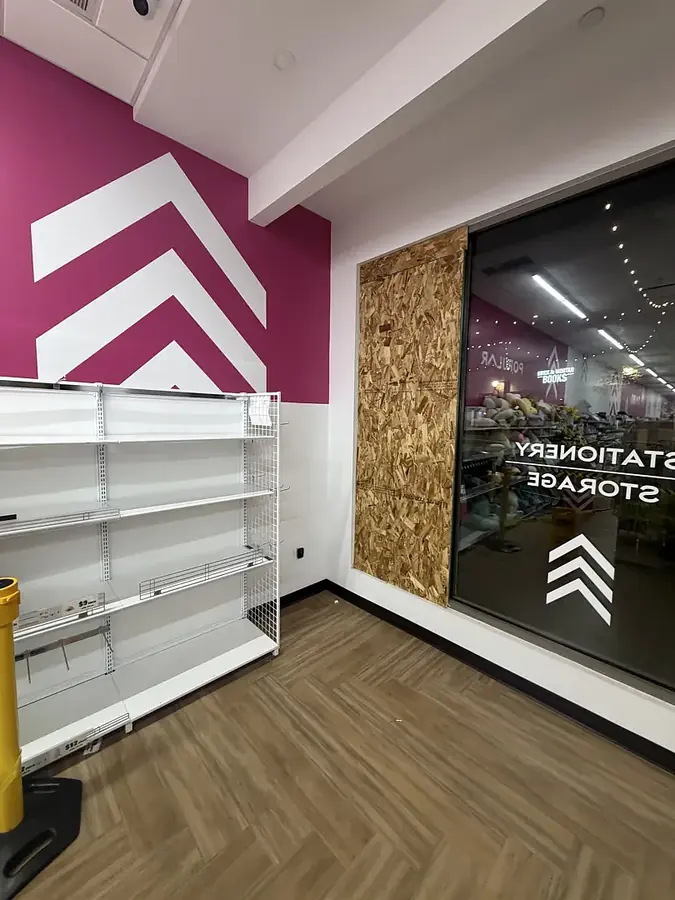
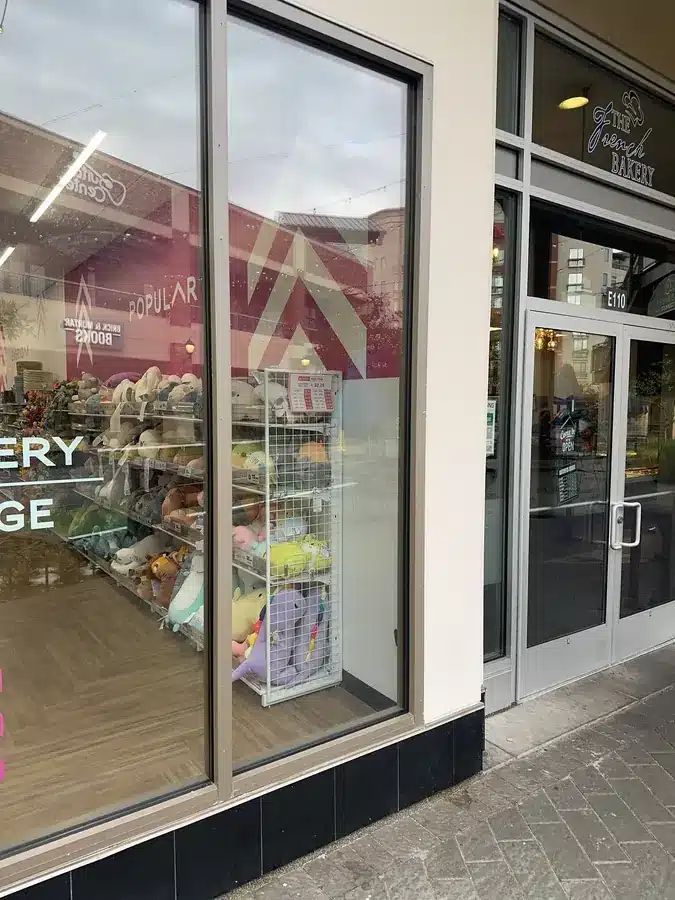
- Doors: door closers on convenience-store doors, pivot bearing kits on warehouse doors, broken door glass boarded up then replaced with tempered glass, a steel security back door and frame replaced at a dollar store, fitting-room door hinges at an apparel store
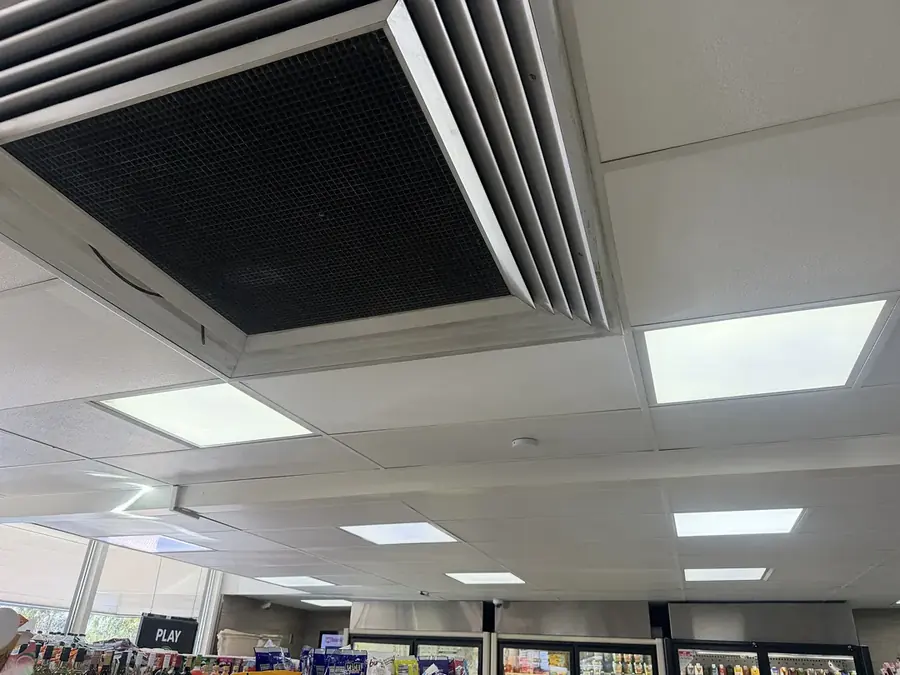
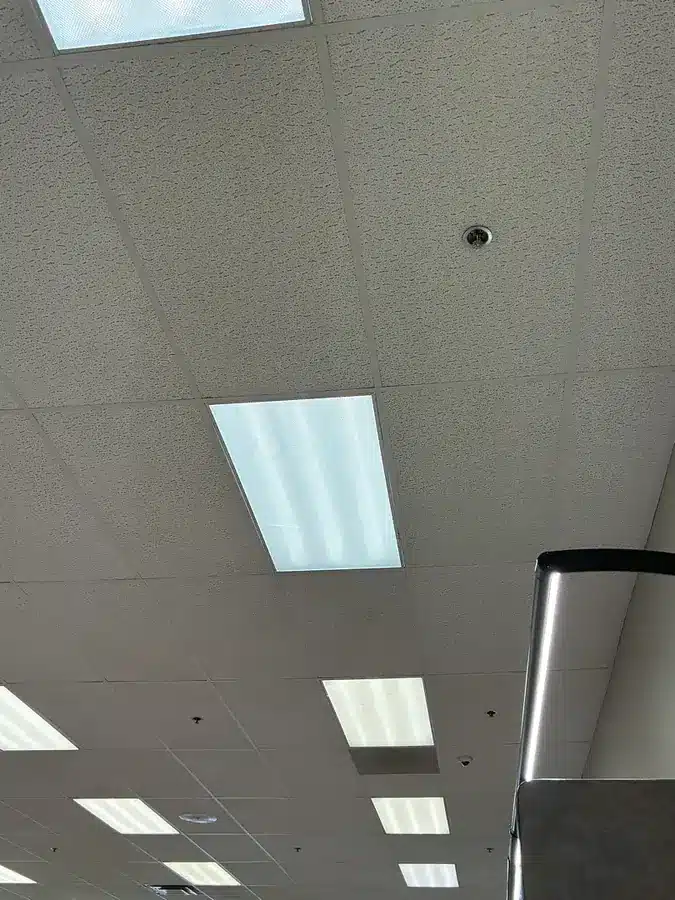
- Lighting: 2×2 LED flat-panel swaps at 10–14 ft ceilings, and ballast-bypass LED retrofits so fixtures no longer depend on a failing ballast
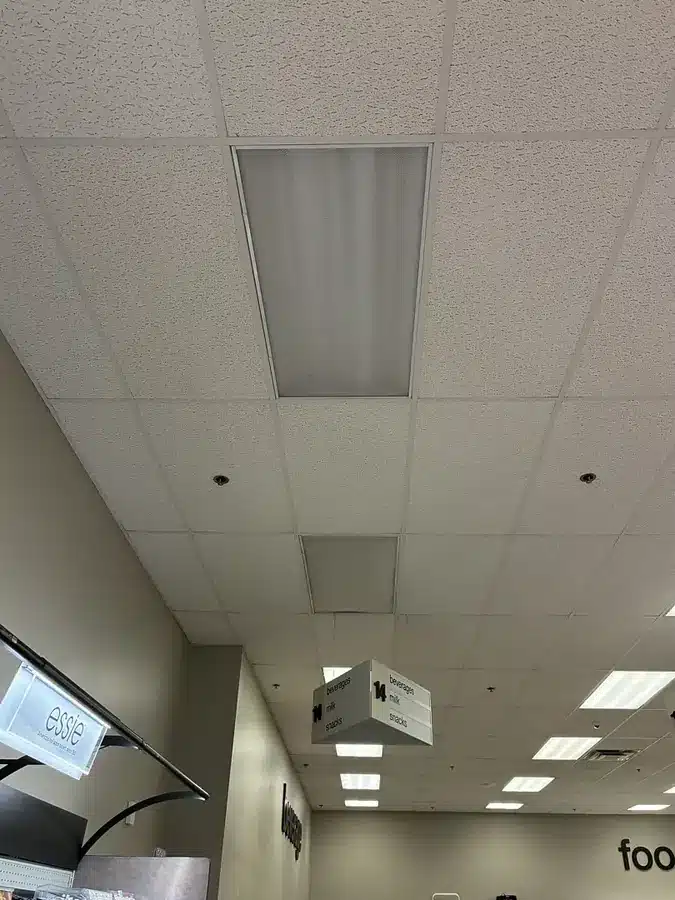
- Ceilings: water-damaged tile replacement, including custom-cut tiles around conduit with added cross tees for support
- Roofs and drains: roof debris and drain clearing, membrane flashing around HVAC curbs, wet-patch repairs at wall intrusions
- Everything else: doorbell chimes, door stops, shelving, parking-stall striping and fabricated dumpster-enclosure gates
Permit-level electrical and plumbing work is coordinated with a licensed contractor. If a job needs a specialist, we’ll say so up front instead of sending a tech who can’t finish it.
Coverage that matches your store map
Our core area is Seattle and King County: every Seattle neighborhood, the Eastside, and south King County through Kent, Auburn and Federal Way. We also cover Snohomish County (Lynnwood to Everett, Marysville and Arlington) and Pierce County (Tacoma, Puyallup, Lakewood).
Multi-store programs that reach further, like a statewide inspection program, are handled case by case and may carry extra travel fees.
That footprint matters for the stores you service most: convenience chains, pharmacies, dollar stores and mall retailers. See our retail and convenience work.
Paperwork before the first dispatch
Vendor onboarding should be quick. Here’s what we have ready:
- Washington Licensed Contractor YOURSSH744J3, licensed, bonded and insured
- A certificate of insurance, with your company added as additional insured when your program requires it
- Background-checked technicians
- A 90-day workmanship warranty on our work
- English and Spanish-speaking owner and crew
What to ask any Seattle subcontractor
Whether or not you work with us, these questions sort out vendors quickly:
- How do you handle check-in and check-out, and who makes the call?
- What happens when the repair exceeds the NTE?
- Can I see a sample work report?
- Which counties do you cover, and what’s your trip fee policy?
- Which trades can one tech complete, and what do you coordinate out?
Subcontractor FAQ
Do you work as a subcontractor for national facility maintenance companies?
Yes. Subcontracting for national maintenance and retail-services companies is one of our two main lines of work, alongside property managers. We take work orders by email, follow your instructions and documentation requirements, and invoice per work order.
Do you take on multi-site programs?
Yes. Annual inspections and rollouts across many stores are a good fit. We track every location, report status across the program, and handle NTE increases site by site.
What areas do you cover?
Seattle and all of King County first, plus Snohomish and Pierce counties. Sites further out are considered case by case.
Have a Seattle-area work order to place? Send it to info@yourseattlehandyman.com or call (206) 460-0033. Learn more about our subcontractor services for maintenance companies.